
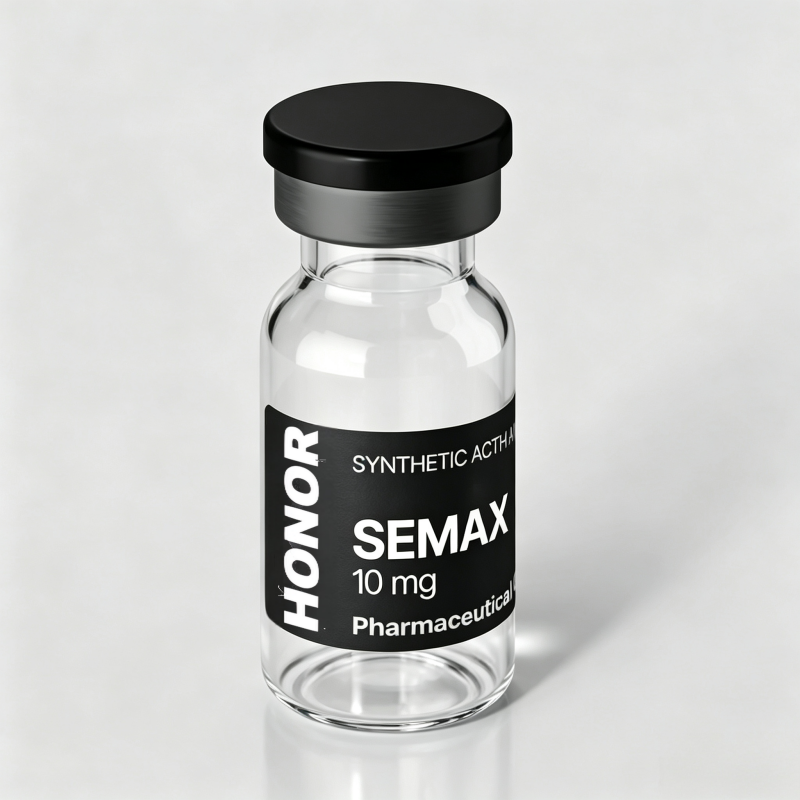
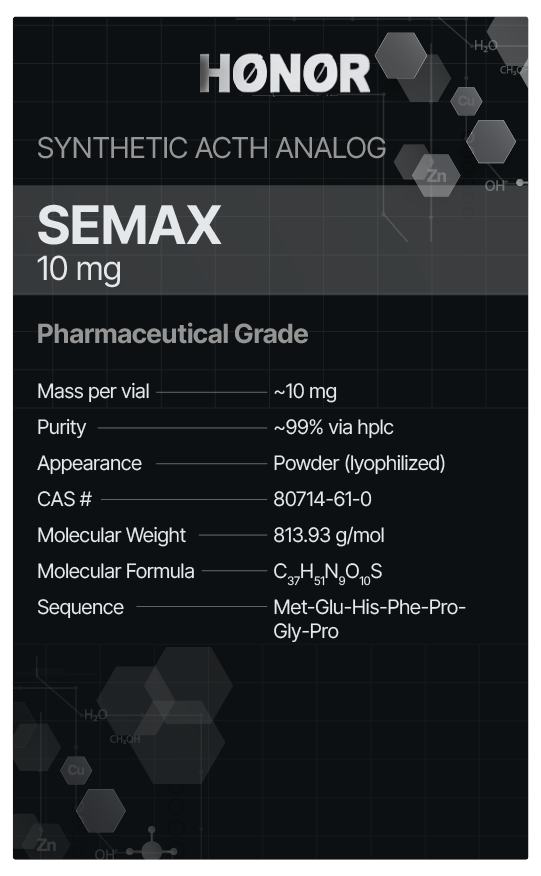
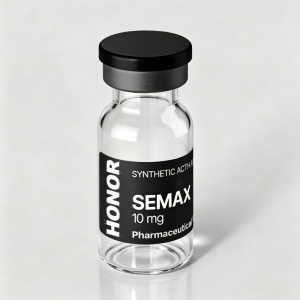
Semax (10mg)
Semax is a synthetic heptapeptide derived from the ACTH(4-10) fragment, developed at the Institute of Molecular Genetics of the Russian Academy of Sciences. Unlike parent ACTH, Semax does not stimulate adrenal steroidogenesis. Registered as a drug in Russia since 1994 for ischemic stroke and cognitive impairment, its research focuses on BDNF/NGF upregulation, neuroprotection in ischemia models, and attention enhancement. Western evidence is largely preclinical; human data derives mostly from Russian-language clinical publications.
- Estimated Delivery : Up to 4 business days
- Free Shipping & Returns : On all orders over $200
Semax is a synthetic heptapeptide derived from the ACTH(4-10) fragment, developed at the Institute of Molecular Genetics of the Russian Academy of Sciences. Unlike parent ACTH, Semax does not stimulate adrenal steroidogenesis. Registered as a drug in Russia since 1994 for ischemic stroke and cognitive impairment, its research focuses on BDNF/NGF upregulation, neuroprotection in ischemia models, and attention enhancement. Western evidence is largely preclinical; human data derives mostly from Russian-language clinical publications.
- Semax is derived from ACTH but has been engineered to retain cognitive effects while completely eliminating the steroidogenic activity of its parent hormone.
- Semax has been approved in Russia as a prescription medication since the 1990s for stroke recovery and cognitive disorders, giving it more real-world clinical data than most research peptides.
- Semax upregulates both BDNF and NGF simultaneously, a dual neurotrophic effect that is uncommon among nootropic compounds and may explain its broad cognitive benefits.
- Unlike stimulant-based cognitive enhancers, Semax builds its nootropic effects over days to weeks through neuroplasticity mechanisms rather than acute neurotransmitter manipulation.
Semax exerts its effects through multiple mechanisms including modulation of BDNF (Brain-Derived Neurotrophic Factor), NGF (Nerve Growth Factor), and other neurotrophins. It affects the expression of genes involved in neuronal plasticity, memory formation, and immune response. Research suggests Semax may also modulate serotonergic and dopaminergic systems and affect enkephalin degradation. The peptide crosses the blood-brain barrier and affects central nervous system function directly.
Cognitive Enhancement
Extensive research demonstrates Semax produces significant improvements in attention span, memory formation, information processing speed, and learning capacity across multiple animal models and human clinical studies. The peptide has been shown to enhance both short-term working memory and long-term memory consolidation through effects on hippocampal function and synaptic plasticity. Studies document improved performance on cognitive tests measuring verbal fluency, spatial reasoning, and executive function. Research indicates particular efficacy for attention-related tasks, with subjects showing enhanced focus duration and reduced distractibility. Clinical trials in Russia have documented benefits for patients with cognitive impairment from various causes including stroke, brain injury, and age-related cognitive decline. The nootropic effects appear to develop over days to weeks of use, suggesting neuroplasticity-mediated mechanisms rather than simple stimulant action.
Neuroprotection
Robust research demonstrates Semax provides significant protection against neural damage from multiple insults including ischemia (stroke), oxidative stress, neurotoxin exposure, and traumatic brain injury. Studies in stroke models show reduced infarct size (area of brain damage), improved neurological outcomes, and enhanced recovery of motor and cognitive function when Semax is administered before, during, or after ischemic events. The peptide appears to protect neurons through multiple mechanisms including antioxidant effects, anti-inflammatory action, and prevention of excitotoxicity. Research indicates protection against hypoxia-induced damage, making it relevant for cardiac arrest and respiratory failure research. Clinical studies in Russia have documented improved outcomes in stroke patients receiving Semax alongside standard treatment protocols. The neuroprotective effects make Semax a candidate for research into neurodegenerative disease prevention and brain injury treatment.
BDNF Modulation
Research demonstrates Semax significantly upregulates Brain-Derived Neurotrophic Factor (BDNF) expression in multiple brain regions including the hippocampus, cortex, and basal forebrain, with effects lasting hours to days after administration. BDNF is crucial for neuronal survival, synaptic plasticity, memory formation, and neurogenesis (birth of new neurons). Studies show Semax increases BDNF mRNA and protein levels through effects on gene transcription pathways. The BDNF elevation is believed to underlie many of Semax’s cognitive and neuroprotective benefits. Research also demonstrates effects on other neurotrophins including Nerve Growth Factor (NGF) and GDNF (Glial cell line-Derived Neurotrophic Factor). These findings have implications for depression research (where BDNF levels are reduced), neurodegenerative disease studies, and understanding mechanisms of cognitive enhancement and brain plasticity.
Anxiolytic Effects
Studies demonstrate Semax produces anxiolytic (anti-anxiety) effects without the sedation, cognitive impairment, or dependence potential associated with benzodiazepine anxiolytics. Research in animal models shows reduced anxiety-related behaviors on established tests including the elevated plus maze, open field test, and light-dark box paradigms. The anxiolytic mechanism appears to involve modulation of serotonergic neurotransmission, effects on GABA systems, and increased enkephalin levels through inhibition of enkephalinase enzymes. Clinical observations in Russia suggest benefits for patients with anxiety disorders and stress-related conditions. Importantly, the anxiolytic effects occur alongside cognitive enhancement rather than at its expense, distinguishing Semax from traditional sedative anxiolytics. These properties make Semax relevant for research into anxiety disorders, performance anxiety, and stress-related cognitive impairment.
Neurorestorative Properties
Emerging research indicates Semax may promote neurological recovery and brain repair following damage from stroke, injury, or disease. Studies suggest the peptide enhances neuroplasticity, allowing undamaged brain regions to compensate for lost function. Research documents improved motor recovery, speech function restoration, and cognitive rehabilitation outcomes when Semax is used adjunctively during recovery periods. The neurorestorative effects appear mediated through BDNF elevation, synaptic remodeling, and potentially neurogenesis in specific brain regions. Animal studies show enhanced axonal regeneration and synaptic connectivity restoration following injury. These findings have implications for stroke rehabilitation research, traumatic brain injury recovery, and potentially neurodegenerative disease treatment approaches.
评论
有没有评论。