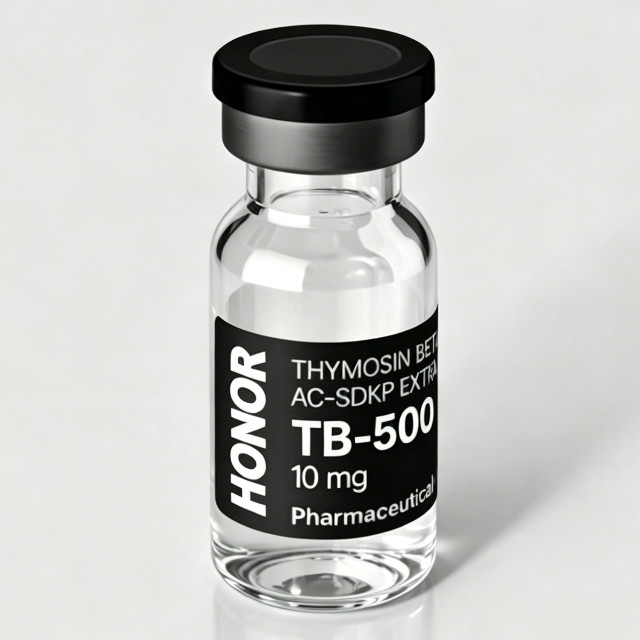
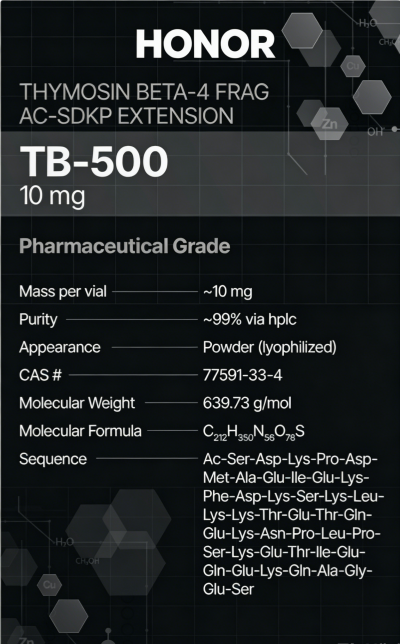
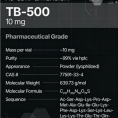
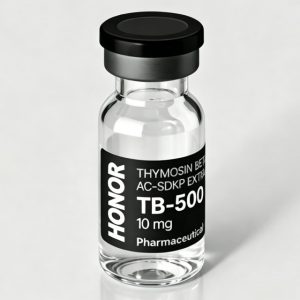
TB-500 (10mg)
TB-500 (Thymosin Beta-4) is a research peptide representing a 43-amino-acid sequence of Thymosin Beta-4, an actin-binding protein involved in cytoskeletal organization and tissue regeneration. Preclinical studies indicate that TB-500 supports cell migration, angiogenesis, and actin polymerization by regulating the β-actin/G-actin cycle and associated growth factor signaling. It is widely used in research focused on wound repair, cellular motility, and peptide-mediated regenerative mechanisms.
- Estimated Delivery : Up to 4 business days
- Free Shipping & Returns : On all orders over $200
TB-500 (Thymosin Beta-4) is a synthetic research peptide corresponding to the active region of Thymosin Beta-4, a naturally occurring actin-binding protein found in many tissues throughout the body. It has been widely studied in preclinical research for its role in cell migration, tissue repair, angiogenesis, and cytoskeletal organization.
1. Supports Tissue Repair and Regeneration
One of the primary benefits of TB-500 is its involvement in tissue healing and regenerative processes. Research shows TB-500 influences cellular pathways that support the repair of muscle, tendon, ligament, and connective tissue, making it a valuable model for studying recovery from injury and tissue stress.
2. Regulates Actin Polymerization and Cytoskeletal Dynamics
TB-500 plays a central role in actin regulation, specifically the balance between G-actin and F-actin. This regulation is essential for maintaining cell shape, movement, and structural integrity, and is a key focus in studies of cell motility and cytoskeletal remodeling.
3. Enhances Cell Migration
Cell migration is critical for wound healing and tissue regeneration. TB-500 has been shown to promote directed cell movement, allowing cells to migrate efficiently to sites of damage. This property makes TB-500 important in research examining wound closure and tissue reorganization.
4. Supports Angiogenesis (Blood Vessel Formation)
Preclinical studies indicate TB-500 may support angiogenic signaling, which is essential for forming new blood vessels. Proper angiogenesis improves oxygen and nutrient delivery to recovering tissues, making TB-500 relevant in studies of vascular support during healing.
5. Modulates Inflammatory Signaling
TB-500 is studied for its potential role in balancing inflammatory responses during tissue repair. Controlled inflammation is essential for proper healing, and TB-500’s regulatory effects make it useful in research on inflammation-mediated recovery pathways.
6. Supports Musculoskeletal Research
Due to its combined effects on cell migration, actin dynamics, and tissue regeneration, TB-500 is frequently used in musculoskeletal research. Experimental models explore its role in muscle fiber repair, connective tissue resilience, and recovery signaling following mechanical stress.
7. Influences Growth Factor and Repair Signaling
TB-500 interacts with multiple growth factor–related pathways involved in regeneration and repair. This makes it valuable for studying how peptides coordinate complex repair signals across tissues.
8. Useful in Wound-Healing Models
TB-500 is commonly used in cutaneous and soft-tissue wound-healing research, where its effects on cell migration, angiogenesis, and cytoskeletal organization are especially relevant to tissue closure and regeneration studies.
9. Systemic Regenerative Research Applications
Unlike peptides with highly localized effects, TB-500 is studied for its broad distribution and systemic regenerative signaling, allowing researchers to investigate whole-body repair responses rather than isolated tissue effects.
10. Key Tool in Regenerative and Peptide Biology Research
TB-500 serves as an important research compound for studying:
Cytoskeletal regulation
Cellular motility
Angiogenesis
Tissue repair mechanisms
Peptide-mediated regeneration
Its multifunctional activity makes it a cornerstone peptide in regenerative biology and tissue repair research.
Summary
In research contexts, TB-500 is valued for its potential benefits related to tissue regeneration, actin regulation, enhanced cell migration, angiogenesis, inflammation modulation, and musculoskeletal recovery signaling. Its central role in cytoskeletal dynamics positions it as a powerful tool for advancing understanding of cellular repair and regenerative processes.
评论
有没有评论。