
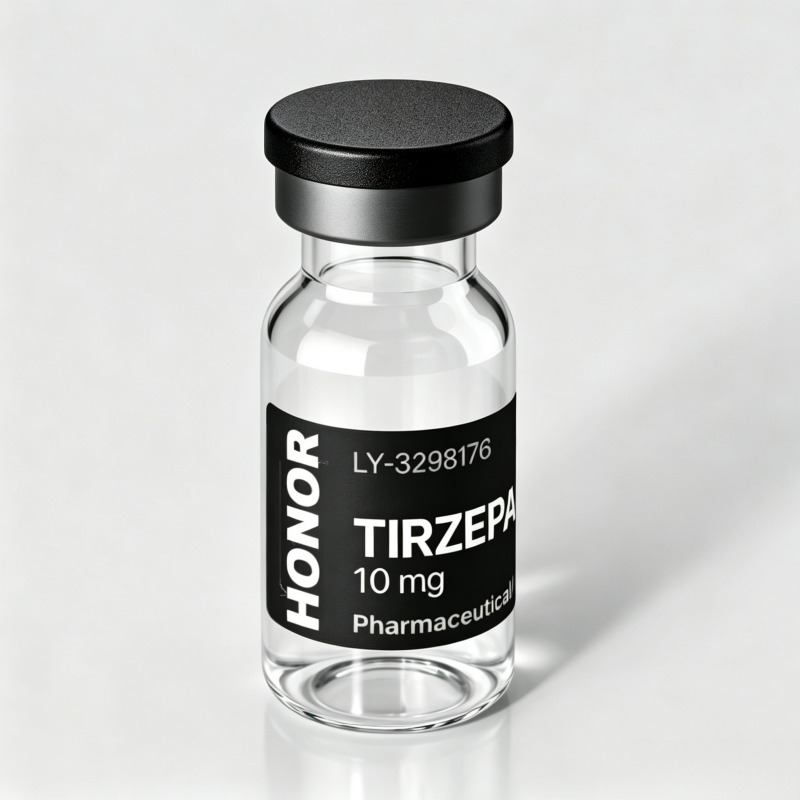
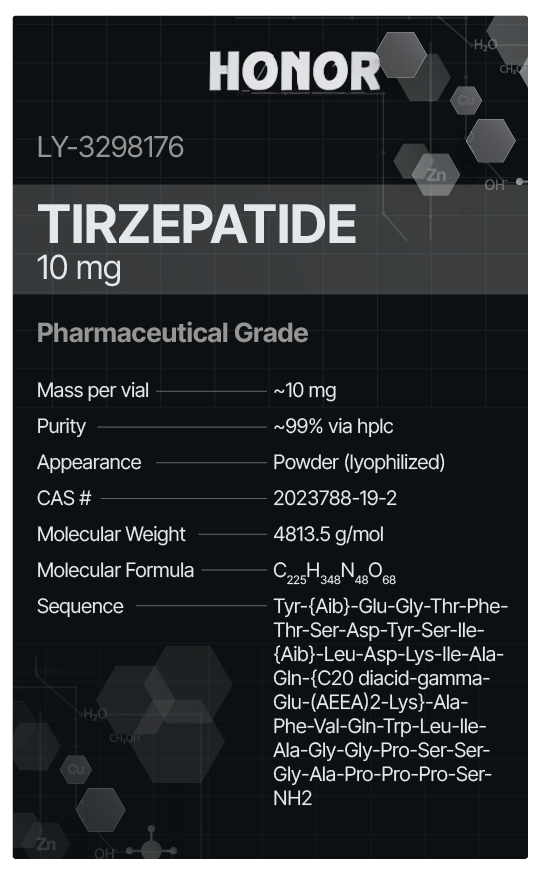
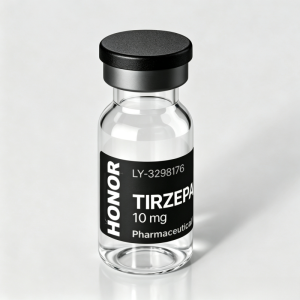
Tirzepatide (10mg)
Tirzepatide is a synthetic dual-incretin peptide that mimics the activity of GLP-1 (glucagon-like peptide-1) and GIP (glucose-dependent insulinotropic polypeptide)—two hormones released by the gut after food intake. By activating both pathways, tirzepatide supports blood glucose regulation, appetite suppression, improved insulin response, and fat metabolism, making it a major focus in metabolic, diabetes, and weight-management research.
- Estimated Delivery : Up to 4 business days
- Free Shipping & Returns : On all orders over $200
Tirzepatide is a dual-incretin peptide developed by Eli Lilly that activates both GLP-1 (glucagon-like peptide-1) and GIP (glucose-dependent insulinotropic polypeptide) receptors. This dual mechanism represents a major advance in metabolic science, allowing researchers to study appetite regulation, glucose control, insulin sensitivity, and fat metabolism through complementary pathways.
1. Powerful Appetite Suppression and Satiety
Tirzepatide’s GLP-1 and GIP receptor activation influences appetite centers in the brain, leading to reduced hunger, earlier fullness, and fewer cravings. This dual action supports sustained caloric reduction, a cornerstone of effective weight-management research.
2. Significant and Sustained Weight Loss
Clinical studies have shown tirzepatide to be associated with substantial, durable weight reduction. By combining appetite suppression with improved metabolic signaling, tirzepatide supports fat loss rather than temporary appetite control, making it highly relevant in obesity research.
3. Improves Blood Glucose Control
Originally developed for type 2 diabetes, tirzepatide enhances glucose-dependent insulin secretion while reducing inappropriate glucagon release. This helps stabilize post-meal blood glucose levels and supports research into glycemic control and insulin dynamics.
4. Enhances Insulin Sensitivity
Beyond stimulating insulin release, tirzepatide improves peripheral insulin sensitivity, allowing cells to use glucose more efficiently. This benefit is central to studies of metabolic syndrome and insulin resistance.
5. Slows Gastric Emptying
Like other incretin-based therapies, tirzepatide delays gastric emptying, which prolongs satiety after meals and reduces rapid glucose spikes. This mechanism contributes to both appetite control and metabolic stability.
6. Supports Fat Metabolism and Energy Balance
Through GIP and GLP-1 signaling, tirzepatide is studied for its effects on lipid metabolism, fat storage regulation, and energy utilization. Researchers explore how this dual-incretin approach supports metabolic flexibility and long-term energy balance.
7. Cardiometabolic Research Benefits
Weight reduction and improved glucose control are closely tied to cardiovascular risk reduction. Tirzepatide is therefore widely studied in cardiometabolic research, including investigations into lipid profiles, blood pressure, and systemic inflammation markers.
8. Reduced “Food Noise” and Eating Drive
Many research participants report a reduction in constant thoughts about food, often referred to as food noise. This behavioral effect is a key focus in studies on eating behavior, habit change, and sustainable lifestyle modification.
9. Once-Weekly Dosing for Consistent Signaling
Tirzepatide is designed for once-weekly administration, providing steady receptor activation over time. This long-acting profile supports consistent appetite and glucose regulation, which is advantageous for long-term metabolic studies.
10. Cornerstone of Next-Generation Metabolic Therapy Research
As a dual GLP-1/GIP agonist, tirzepatide represents a new class of metabolic peptides. It is widely used to study:
Integrated incretin signaling
Obesity and diabetes mechanisms
Long-term weight-loss biology
Future peptide-based metabolic therapies
Summary
In research and clinical contexts, tirzepatide is valued for its benefits in appetite suppression, significant weight loss, improved blood glucose control, enhanced insulin sensitivity, fat metabolism support, and cardiometabolic health. Its dual-incretin mechanism (GLP-1 + GIP) places it at the forefront of modern metabolic and weight-management research.
是第一个审查"Tirzepatide (10mg)"
相关产品
-
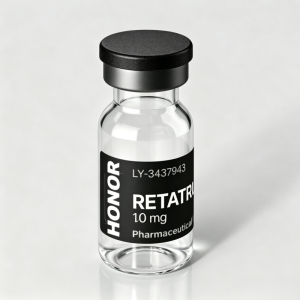
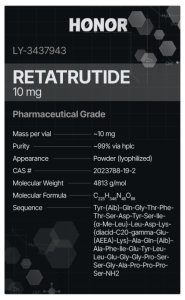
Retatrutide (10mg)
$160 -
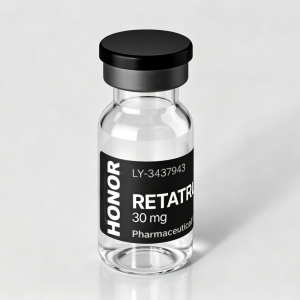
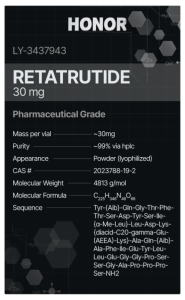
Retatrutide (30mg)
$418
评论
有没有评论。