“IGF1-LR3 (1mg)” 已被添加到您的购物车。
查看购物车
-
$329
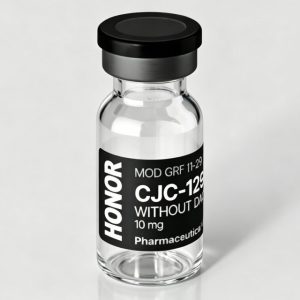
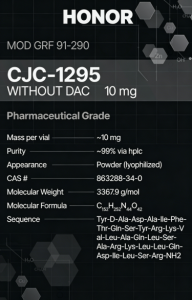
CJC-1295 (No DAC), also known as Modified GRF (1–29), is a research peptide and a stabilized analog of growth hormone–releasing hormone (GHRH 1–29) designed for improved receptor affinity without DAC conjugation. It activates the GHRH receptor, stimulating cAMP and somatotropic signaling pathways under experimental conditions. CJC-1295 (No DAC) is widely used in research focused on peptide pharmacokinetics, growth hormone signaling, and pituitary receptor regulation.
-
$360
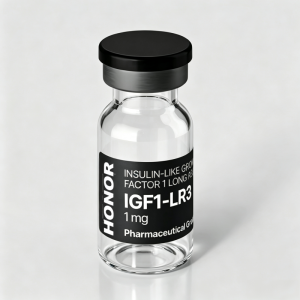
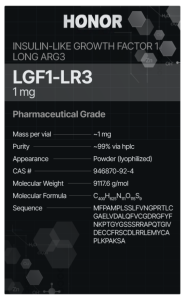
IGF-1 LR3 is a research peptide analog of human insulin-like growth factor-1 (IGF-1) featuring a 13-amino-acid N-terminal extension that improves stability and receptor affinity. In experimental models, IGF-1 LR3 activates the IGF-1 receptor, stimulating PI3K/Akt and MAPK/ERK signaling pathways involved in cell growth, differentiation, metabolic regulation, and anabolic signaling. It is widely used in research focused on receptor kinetics, tissue remodeling, and peptide-mediated growth mechanisms.
-
$142
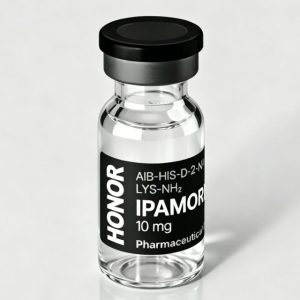
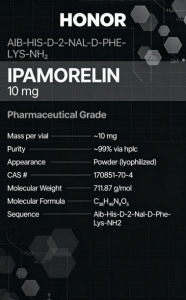
Ipamorelin is a synthetic pentapeptide growth hormone secretagogue that selectively activates the growth hormone secretagogue receptor (GHS-R1a), also known as the ghrelin receptor. In research models, Ipamorelin stimulates Gq/PLC-dependent calcium signaling to promote growth hormone release while showing minimal effect on other pituitary hormones such as ACTH, cortisol, prolactin, FSH, LH, and TSH. Its high receptor selectivity makes Ipamorelin a widely used compound in studies of somatotropic signaling, pituitary receptor pharmacology, and peptide-mediated tissue and musculoskeletal research.
-
$130
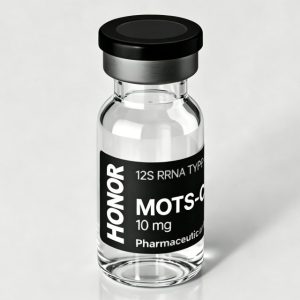
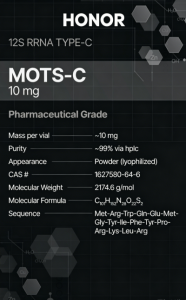
MOTS-c is a mitochondria-derived research peptide composed of 16 amino acids and encoded within the mitochondrial 12S rRNA gene. Preclinical studies show that MOTS-c plays a role in cellular metabolism and mitochondrial homeostasis by activating AMPK signaling pathways. Due to its unique mitochondrial origin, MOTS-c is widely used in metabolic, aging, and energy regulation research, particularly in studies focused on stress adaptation and mitochondrial signaling mechanisms.
-
$366
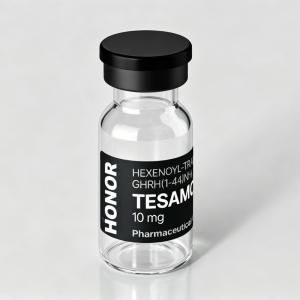
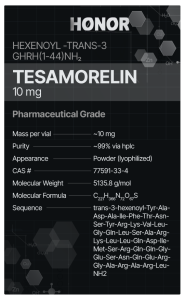
Tesamorelin is a stabilized synthetic analog of growth hormone–releasing hormone (GHRH 1–44) featuring a trans-3-hexenoic acid modification that improves peptide stability. In experimental settings, tesamorelin binds to GHRH receptors to stimulate endogenous growth hormone synthesis and secretion. It is widely used in endocrine and metabolic research focused on peptide stability, receptor binding kinetics, and modulation of the somatotropic (GH) axis.

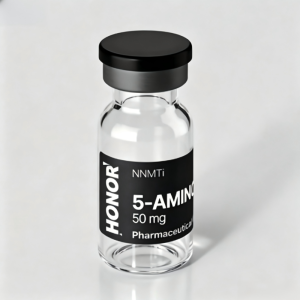 5-Amino-1MQ (10mg)