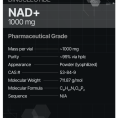
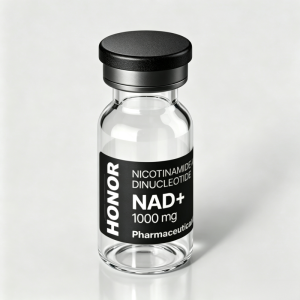
NAD+ (1000mg)
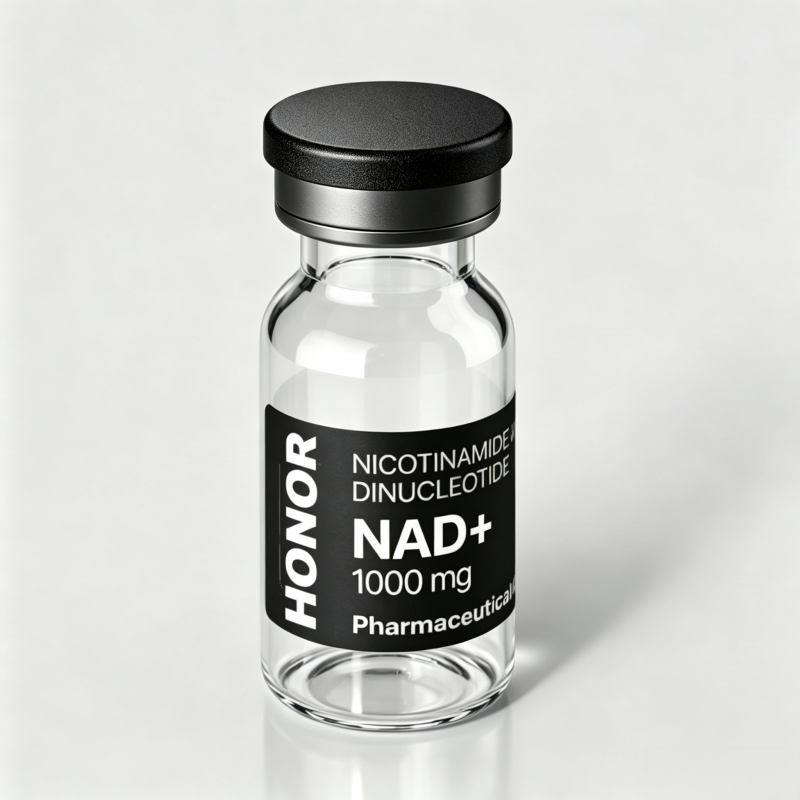
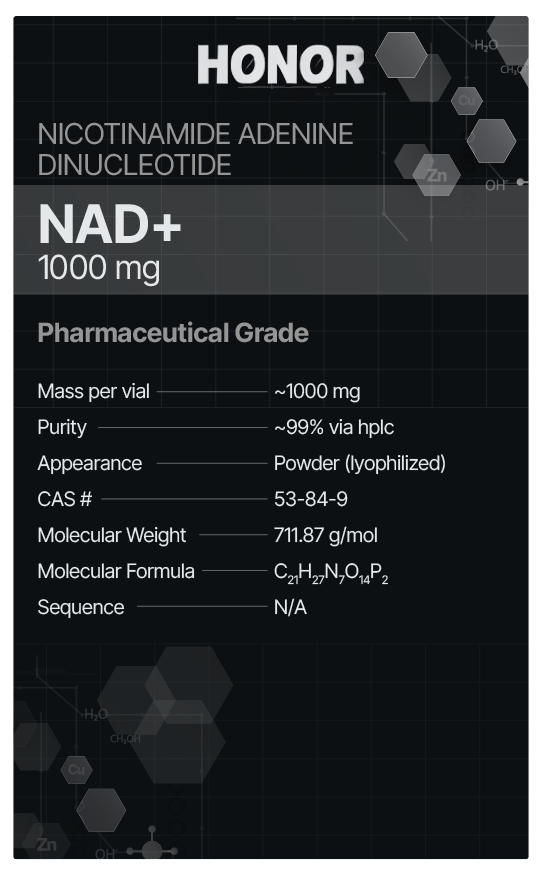
NAD⁺ (nicotinamide adenine dinucleotide) is an essential cellular coenzyme that plays a central role in redox metabolism and energy production. It functions as a key electron carrier, cycling between NAD⁺ and NADH to support mitochondrial oxidative phosphorylation and glycolytic energy transfer in experimental models. Beyond metabolism, NAD⁺ acts as a required substrate for sirtuins and PARP enzymes, which are involved in DNA repair, gene expression, cellular stress response, and aging-related pathways. As a result, NAD⁺ is widely used in research focused on mitochondrial health, muscle metabolism, neuroprotection, cellular resilience, and longevity mechanisms.
- Estimated Delivery : Up to 4 business days
- Free Shipping & Returns : On all orders over $200
NAD⁺ (Nicotinamide Adenine Dinucleotide) is an essential cellular coenzyme present in every living cell and fundamental to energy metabolism, cellular repair, and stress resilience. It plays a dual role as both an electron carrier in metabolic reactions and a required substrate for key regulatory enzymes involved in longevity and DNA maintenance.
1. Supports Cellular Energy Production
One of the most critical benefits of NAD⁺ is its role in energy generation. NAD⁺ cycles between its oxidized (NAD⁺) and reduced (NADH) forms to drive mitochondrial oxidative phosphorylation and glycolysis, enabling cells to efficiently convert nutrients into ATP. This process is central to maintaining cellular vitality and metabolic performance.
2. Enhances Mitochondrial Function and Health
Healthy mitochondria are essential for overall cellular function. NAD⁺ supports mitochondrial homeostasis, helping maintain efficient electron transport and metabolic flexibility. Research commonly uses NAD⁺ to study mitochondrial efficiency, biogenesis, and stress adaptation, especially under conditions of metabolic demand.
3. Activates Sirtuins Linked to Longevity
NAD⁺ is a required cofactor for sirtuins, a family of enzymes involved in gene regulation, metabolic balance, and cellular longevity. Sirtuin activity has been closely associated with aging research, caloric restriction pathways, and improved cellular stress resistance.
4. Supports DNA Repair and Genomic Stability
NAD⁺ serves as a substrate for poly(ADP-ribose) polymerases (PARPs), enzymes responsible for DNA damage detection and repair. Adequate NAD⁺ availability is essential for maintaining genomic integrity, particularly in cells exposed to oxidative or environmental stress.
5. Promotes Cellular Stress Resilience
Cells rely on NAD⁺ to respond effectively to oxidative stress, inflammation, and metabolic challenges. Through its involvement in redox balance and enzyme activation, NAD⁺ helps regulate cell survival pathways and adaptive stress responses.
6. Supports Muscle Metabolism and Physical Performance Research
NAD⁺ is widely studied in muscle metabolism due to its role in ATP production and mitochondrial efficiency. Research models explore how NAD⁺ availability influences muscle endurance, recovery signaling, and metabolic flexibility.
7. Plays a Role in Neuroprotection Research
Neurons are highly energy-dependent and sensitive to metabolic disruption. NAD⁺ is commonly investigated in neurobiology research for its potential role in neuronal energy balance, synaptic maintenance, and resistance to cellular stress.
8. Central to Aging and Longevity Research
NAD⁺ levels naturally decline with age, which has linked it closely to aging biology. Research involving NAD⁺ focuses on understanding how restoring or maintaining NAD⁺ levels may support cellular resilience, metabolic health, and age-related functional decline.
9. Regulates Cellular Redox Balance
As a core redox coenzyme, NAD⁺ helps maintain the balance between oxidation and reduction within cells. Proper redox balance is essential for enzyme function, metabolic signaling, and protection against oxidative damage.
10. Essential Tool in Metabolic and Cellular Research
Due to its central role in metabolism, signaling, and repair, NAD⁺ is a cornerstone molecule in studies of mitochondrial biology, energy regulation, stress response, and systems-level cellular health.
Summary
In research contexts, NAD⁺ is valued for its benefits related to energy production, mitochondrial health, DNA repair, stress adaptation, neuroprotection, muscle metabolism, and aging-related pathways. Its involvement in both metabolic and regulatory processes makes it one of the most important molecules for understanding cellular resilience and longevity mechanisms.
是第一个审查"NAD+ (1000mg)"
相关产品
-
5-Amino-1MQ (10mg)
$138
评论
有没有评论。