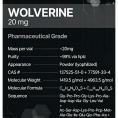
Wolverine Stack
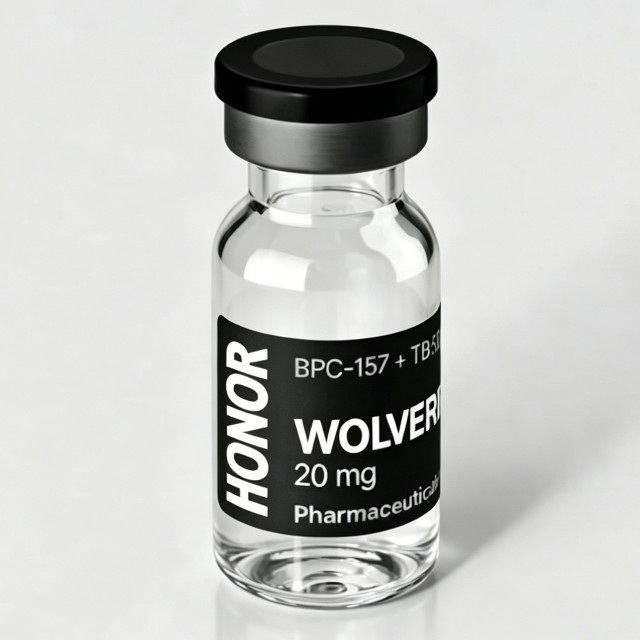
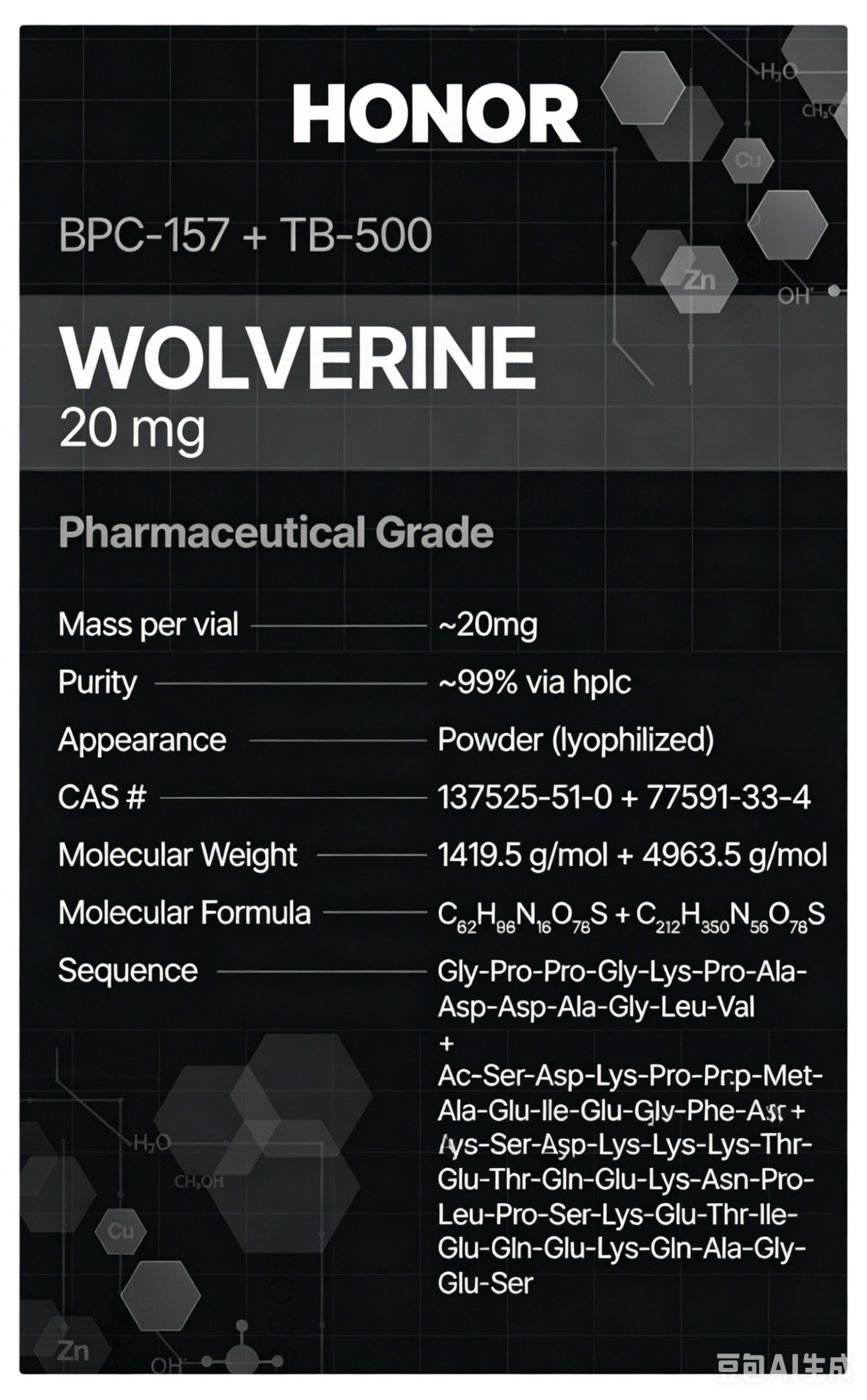
The BPC-157 + TB-500 Blend is a research peptide combination studied for its role in cellular repair, angiogenesis, and tissue remodeling. BPC-157, a 15-amino-acid gastric peptide fragment, supports nitric oxide modulation and growth factor signaling, while TB-500 (a segment of Thymosin Beta-4) regulates actin polymerization and cytoskeletal organization. Together, this blend is widely used in preclinical regenerative biology research, including studies on wound modulation and peptide-mediated cellular recovery.
- Estimated Delivery : Up to 4 business days
- Free Shipping & Returns : On all orders over $200
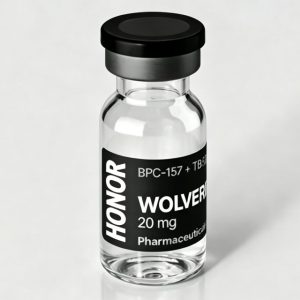
WOLVERINE is a dual-peptide research blend that combines BPC-157 and TB-500 (Thymosin Beta-4 fragment)—two well-studied peptides known for their complementary roles in tissue repair, angiogenesis, cytoskeletal regulation, and regenerative signaling. Together, they are used in preclinical and experimental models to explore multi-pathway cellular recovery and regeneration.
1. Multi-Pathway Tissue Repair Support
WOLVERINE brings together two peptides that act on distinct yet interconnected repair mechanisms:
BPC-157 supports nitric oxide balance and growth-factor–related signaling involved in tissue protection.
TB-500 regulates actin dynamics and cytoskeletal remodeling essential for repair.
This combination allows researchers to study coordinated tissue recovery rather than isolated repair pathways.
2. Enhanced Angiogenic Signaling
Both peptides are studied for their influence on angiogenesis, the formation of new blood vessels. Proper vascular support is critical for delivering oxygen and nutrients to recovering tissues, making WOLVERINE valuable in research examining vascular adaptation during regeneration.
3. Cytoskeletal Organization and Cell Migration
TB-500’s regulation of actin polymerization supports cell motility and structural reorganization, while BPC-157 contributes to cellular stability during stress. Together, they enable investigation into directed cell migration and tissue remodeling, key components of wound repair.
4. Supports Musculoskeletal and Connective Tissue Research
WOLVERINE is commonly referenced in studies focused on muscle fibers, tendons, ligaments, and soft tissue, where coordinated signaling between growth factors, cytoskeletal elements, and vascular support is essential for recovery following mechanical stress.
5. Modulation of Inflammatory and Stress Responses
Balanced inflammation is necessary for proper healing. BPC-157 is studied for its role in inflammatory signaling modulation, while TB-500 supports orderly repair processes. This makes WOLVERINE useful in research exploring controlled inflammatory environments during regeneration.
6. Extracellular Matrix (ECM) Remodeling
Effective tissue repair requires adaptation of the extracellular matrix. Through growth-factor signaling and cytoskeletal regulation, WOLVERINE supports experimental models examining ECM turnover, structural integrity, and tissue resilience.
7. Synergistic Regenerative Research Design
One of WOLVERINE’s primary advantages is synergy. By combining peptides that act on vascular, cellular, and structural pathways, researchers can explore systems-level regeneration, gaining insights into how multiple repair mechanisms interact in real biological environments.
8. Useful in Wound and Recovery Models
WOLVERINE is frequently used in wound-healing and recovery research, where cell migration, angiogenesis, and cytoskeletal dynamics must occur in a coordinated manner for successful tissue restoration.
9. Broad Applicability Across Tissue Types
Unlike highly specialized compounds, WOLVERINE is studied across a wide range of tissues, making it suitable for whole-system regenerative models rather than organ-specific investigations alone.
10. Valuable Tool in Advanced Peptide Research
WOLVERINE enables research into:
Peptide synergy and interaction
Regenerative signaling networks
Cellular recovery under stress
Coordinated tissue remodeling mechanisms
Its dual-peptide design supports complex biological modeling beyond single-target approaches.
Summary
In research settings, WOLVERINE is valued for its potential benefits related to cellular repair, angiogenesis, cytoskeletal organization, inflammation modulation, extracellular matrix remodeling, and musculoskeletal recovery signaling. By combining BPC-157 and TB-500, WOLVERINE provides a powerful platform for studying integrated regenerative biology and peptide-mediated cellular recovery mechanisms.
是第一个审查"Wolverine Stack"
相关产品
-
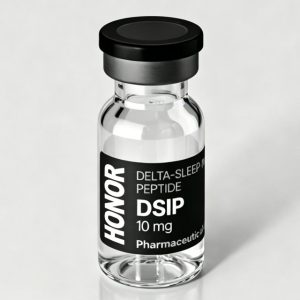
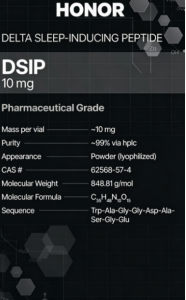
DSIP (10mg)
$164
评论
有没有评论。